
Adiabatic Cooling of UK Car Plant
A Sealpump Engineering Case Study
Adiabatic Cooling of a UK Car Plant
Issue:
Following a successful installation of an Alpha high pressure humidification system at a large UK automotive manufacturing plant to control the relative humidity and reduce the airborne dust caused by operators lightly sanding imperfections from the paint work in the sanding bays, Sealpump were asked to return to install two extra zones.
While the benefits of the initial system installation were proven with dust controlled better and relative humidity being stable, employees working in the areas with the system in place requested the system also because of the adiabaticAn adiabatic humidifier is a type of humidification system that adds moistur... ...click for more effect it had.
This cooling effect made the working environment a lot more comfortable for the people in these areas.
As these areas are for inspecting the paintwork, there are very warm due to the amount of lights in the bays, this coupled with the warm temperature of the ovens and general process can increase the ambient temperature considerably, especially in the summer months
Solution:
As the plant already had an Alpha high pressure humidification system controller installed for the initial zone, Sealpump technicians returned to site to install the necessary equipment to add a further two independently controlled zones to the main Alpha unit.
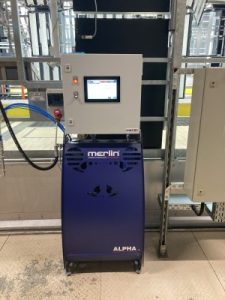 The Alpha control unit can run up to 12 separately controlled zones from the one controller, making monitoring easy. For applications with a number of zones, this is also beneficial as it means the customer only has to get power, water and a drain to one central location.
Once the pipe work, sensor cables, humidity sensors and AER1 nozzle modules were installed over a weekend by Sealpump technicians, the system was brought on line and commissioned and handed over to the site engineers. All the installation was carried out over a weekend to allow the systems to be fully installed and working for production start up on the Monday morning.
Results:
The result of the system running was a reduction in the ambient temperatures in these extra two zones by around 4 degrees, making the environment a lot better for the operators.
Humidity was also maintained at the desired level and airborne dust created by the sanding process was again reduced.!
Related to this case study: